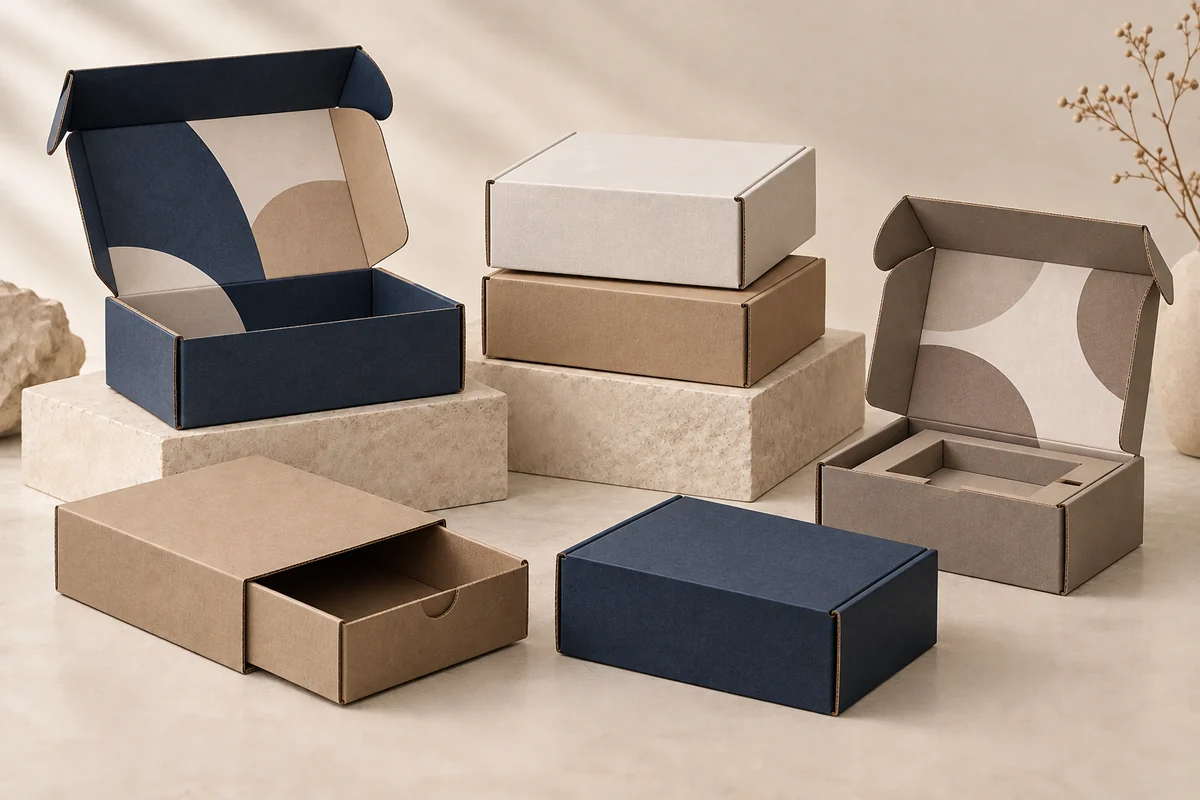
Roll-End Mailer
A common self-locking mailer style that creates a clean presentation without separate tape inside the pack.
Suitable for: E-commerce, subscription products
Protective, presentable corrugated packaging for e-commerce, subscription and direct-to-customer delivery.
We coordinate the mailer structure, flute direction, print, inserts, packing and shipping plan as one packaging project.
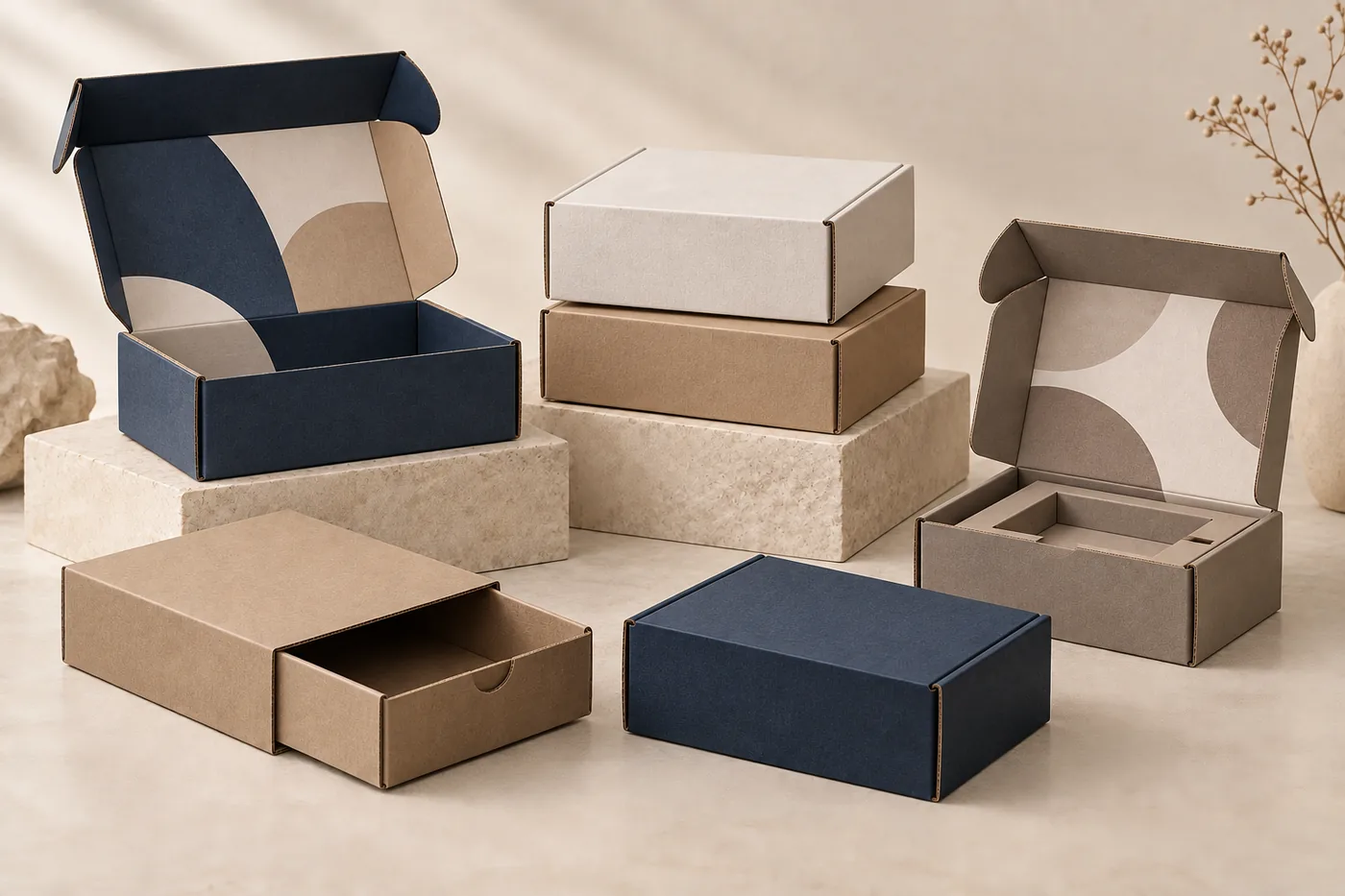
A corrugated mailer combines a die-cut shipping structure with one or more fluted paper layers. It can provide transit protection while creating a controlled opening experience for e-commerce and subscription products.
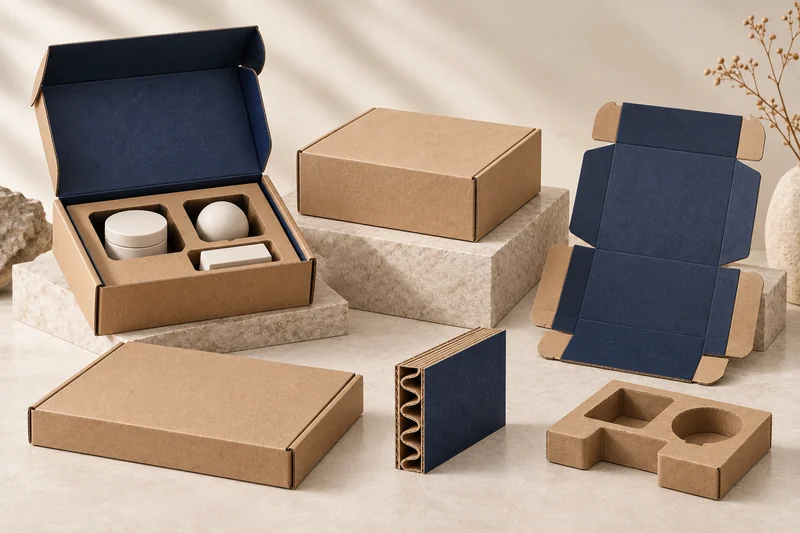
Flute, board combination, product fit, opening experience and shipment method need to be reviewed together.
A common self-locking mailer style that creates a clean presentation without separate tape inside the pack.
Suitable for: E-commerce, subscription products
Extended internal flaps can improve closure and help contain the packed product.
Suitable for: Apparel, accessories, product kits
A die-cut or separate insert can control product movement and improve presentation.
Suitable for: Beauty sets, electronics, fragile items
Interior graphics can extend the unboxing experience while the exterior remains restrained.
Suitable for: DTC brands, subscription packs
Dimensions are developed around the actual product and protective components.
Suitable for: Projects focused on fit and shipping volume
Materials typically considered for corrugated mailer boxes include E-Flute Concept, B-Flute Concept, Kraft Liner. Selection follows the structure, the product and the market, not a default list.
A relatively fine corrugated profile often considered when print surface and compact structure matter.
A deeper corrugated profile that may be considered when the project calls for a different protection and stacking balance.
A natural exterior direction with board performance selected to match the project.
A clean surface direction for outside or inside graphics where suitable.
Print coverage, inside graphics, coatings, tear features and inserts must remain compatible with the corrugated structure.
A mailer that is much larger than the product can create movement, use more filler and increase shipping volume. We review product fit, insert needs, closure and outer-carton packing together.
Mailer sizing drives both protection and freight volume, so we confirm the packed dimensions rather than only the product dimensions.
Send the product size and weight, quantity, shipment method and reference images. We can help identify a suitable mailer and protection direction without inventing unsupported load claims.
Start with what you already know:
We use those to confirm the mailer size, flute direction and protection approach before quoting.
A mailer has to survive the journey and still open well, so protection and presentation are decided together rather than in sequence.
A mailer sized to the product cuts void fill and shipping volume at the same time.
Flute direction and insert design decide how the product survives the journey, not the outer print.
Tear features and interior print shape the unboxing, and both need to suit the die-cut.
How the mailer is erected and filled affects both packing time and outer-carton efficiency.
Mailer MOQ shifts with the board combination, die-cutting, print coverage, inserts and how the mailers are supplied. We confirm it against the real specification.
Mailer MOQ depends on dimensions, flute and liner selection, printing coverage, die-cutting, inserts and assembly requirements.
A mailer travels before it is opened. These checkpoints move the project from product dimensions to an approved, shipping-ready pack.
Share the product dimensions, weight and how it will be packed. This sets the mailer size and the board direction.
Select the flute and liner combination against the protection, print surface and stacking the shipment needs.
Decide whether the product is held by the structure, an insert or void fill -- and size the mailer around that.
Check closure, opening experience, print registration and product fit in the assembled mailer.
Follow the die-cut, flute direction, print and insert through production and inspection.
Confirm how the mailer travels -- flat or assembled, single or outer-carton -- and plan consolidation.
For a mailer, the product size, weight and how it ships tell us more than a preferred box style does.
Begin with the product size, weight and a reference image. Flute, insert and closure direction can follow once we understand how it ships.
Start the RFQ →MOQ depends on size, board combination, print coverage, die-cutting, inserts and project quantity. We confirm it after reviewing the specification.
The suitable flute concept depends on dimensions, product weight, protection, print expectations and shipping conditions. We recommend after reviewing the project.
Inside printing may be possible depending on the structure, board, print method and production requirements.
We can review dimensions, fit, inserts and outer-carton packing to identify a practical right-sized direction.
Send product type, quantity, product dimensions and reference images. We will turn them into the next practical specification and quotation step.
Explore components commonly reviewed alongside corrugated mailer boxes when one project includes more than the primary pack.