Product Weight
The insert needs to support the product without excessive movement or deformation.
Suitable for: Light to heavier product formats
Insert solutions developed around product fit, protection, presentation, packing and the complete shipping journey.
We evaluate the insert with the outer packaging and delivery plan instead of treating it as a separate afterthought.
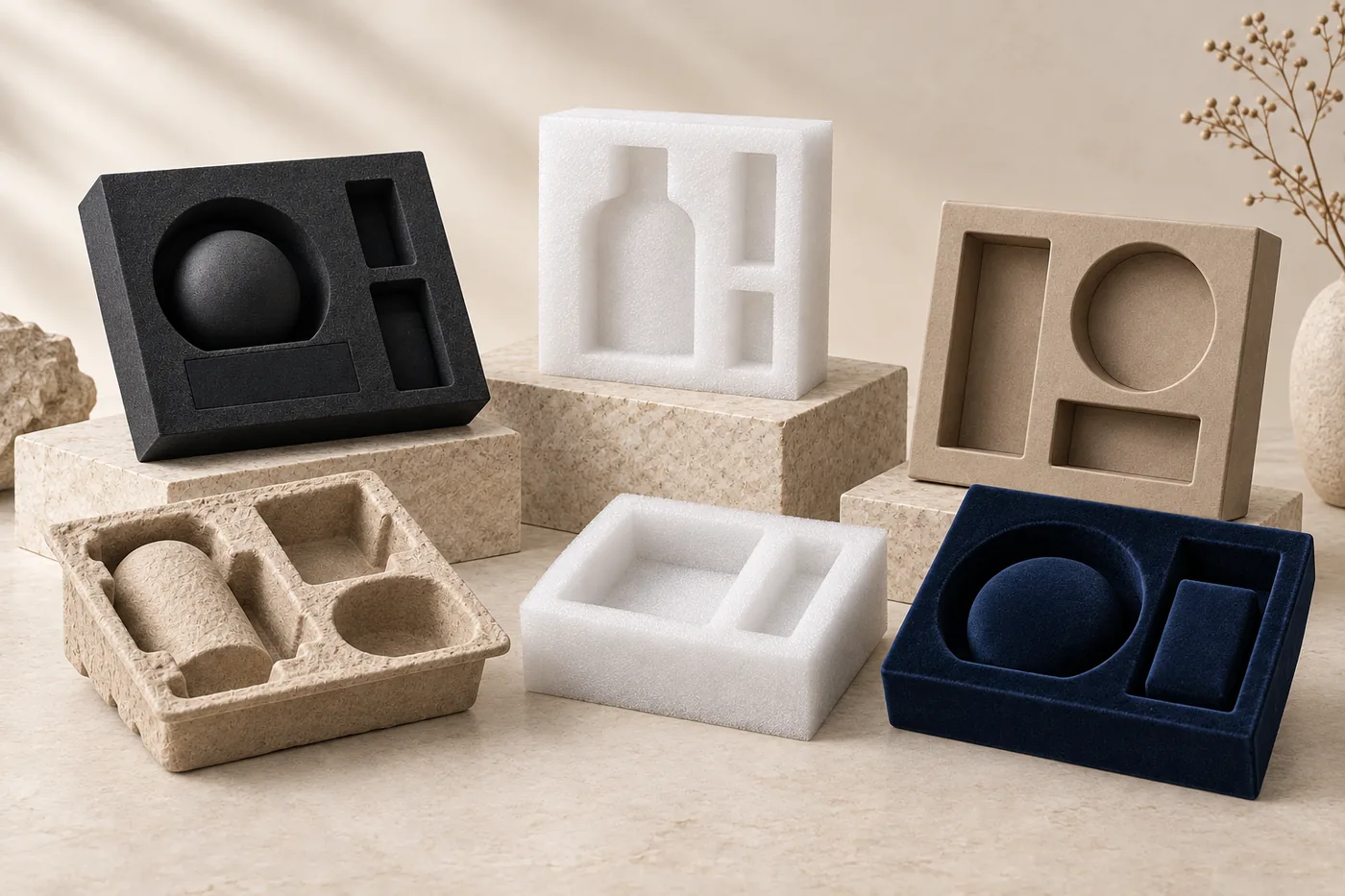
An insert controls how a product sits, moves and presents inside its outer package. The right solution depends on the product, fragility, desired appearance, packing method, budget and shipping conditions.

Material is not the first question. We start with the product and what the insert needs to achieve.
The insert needs to support the product without excessive movement or deformation.
Suitable for: Light to heavier product formats
Surface sensitivity, breakage risk and movement influence cushioning and cavity design.
Suitable for: Glass, electronics, delicate finishes
Color, edge quality and surface feel should match the intended unboxing experience.
Suitable for: Premium and presentation-led packs
Material, tooling, assembly and yield need to suit the commercial target.
Suitable for: Cost-conscious to premium projects
Fiber-based or reduced-material options can be reviewed where they meet the project requirements.
Suitable for: Projects with material preferences
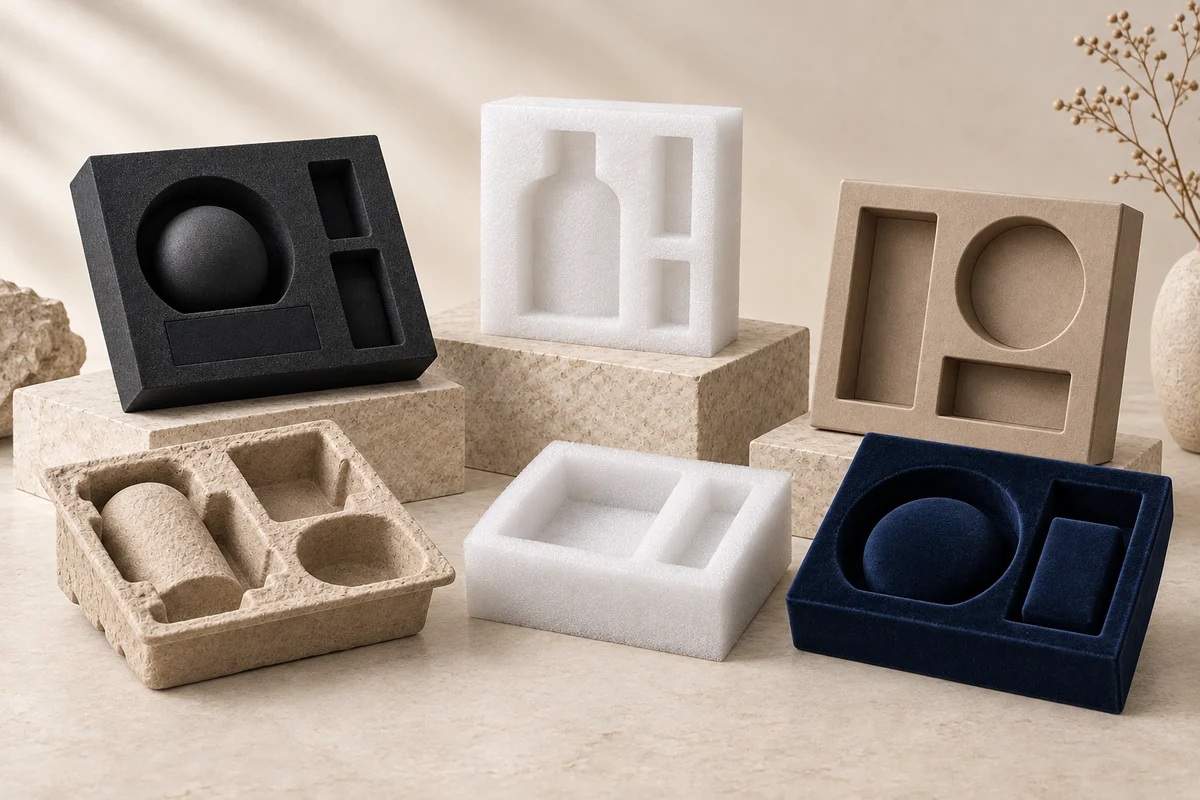
Materials typically considered for custom inserts include EVA, EPE, Paperboard. Selection follows the structure, the product and the market, not a default list.
A dense foam direction for precise cavities and a clean presentation where suitable.
A lightweight cushioning direction selected according to protection and appearance needs.
Die-cut and folded paper structures for separation, support and coordinated graphics.
A formed fiber option where tooling, appearance and performance suit the project.
Foam types and densities depend on product weight, protection and presentation requirements.
An optional wrapped finish for selected presentation-led foam insert projects.
Cavity dimensions, tolerances, finger access, layering, wrapping and assembly are developed around the real product.
An insert is successful only when it holds the product securely, presents it clearly, can be packed reliably and works with the outer packaging through transport.
Insert accuracy depends on the product itself, so drawings or dimensions may need verification before final tooling is committed.
Send the product, weight, dimensions, quantity and a photo. We can compare suitable insert directions and identify what needs to be tested.
Start with what you already know:
We turn the product dimensions and handling needs into a defined cavity, material and tolerance direction.
An insert succeeds or fails on physical fit, so the useful decisions are dimensional ones -- material and appearance come after those are settled.
Cavity dimensions and tolerance decide whether the product is held or rattles.
Material and thickness are chosen against the handling journey, not against appearance alone.
How the insert is loaded affects packing time and consistency at volume.
Insert thickness changes the outer box size, so both are confirmed together.
Insert MOQ depends on the tooling behind the cavity, the material, wrapping or laminating steps and manual assembly. It follows the design, not the other way round.
Insert MOQ depends on material, dimensions, cavity complexity, tooling, lamination or wrapping, assembly and the outer-pack quantity.
An insert is proven on a physical fit, so these checkpoints run from product data to a tested cavity before production.
Share the product, its exact dimensions and how it should sit. Fit and tolerance start here.
Compare foam, paperboard, molded fiber and wrapped options against protection, appearance and handling.
Define cavity shape, depth, finger access and any accessory wells around the real product.
Test the physical fit -- the insert is only proven once the actual product sits in it correctly.
Follow tolerance, cutting or molding, wrapping and assembly through production and inspection.
Confirm the insert works inside the chosen outer box and the packed unit ships as intended.
For an insert, the product itself, its dimensions and a photo tell us more than a material preference does.
Start with the product, its dimensions and a photo. A physical sample or verified drawing may be needed later, but not to begin.
Start the RFQ →MOQ varies by material, tooling, cavity design, wrapping and quantity. We review the product and outer packaging before confirming a practical route.
Yes. Product dimensions, weight, fragility, appearance, budget and shipping needs guide the recommendation.
Yes. Coordinating both components helps confirm fit, presentation, packing and shipping as one system.
Accurate dimensions and photos can start the discussion. A physical sample or verified 3D information may be needed before final tooling or production.
Send product photos, quantity, exact product dimensions and reference images. We will turn them into the next practical specification and quotation step.
Explore components commonly reviewed alongside custom inserts when one project includes more than the primary pack.