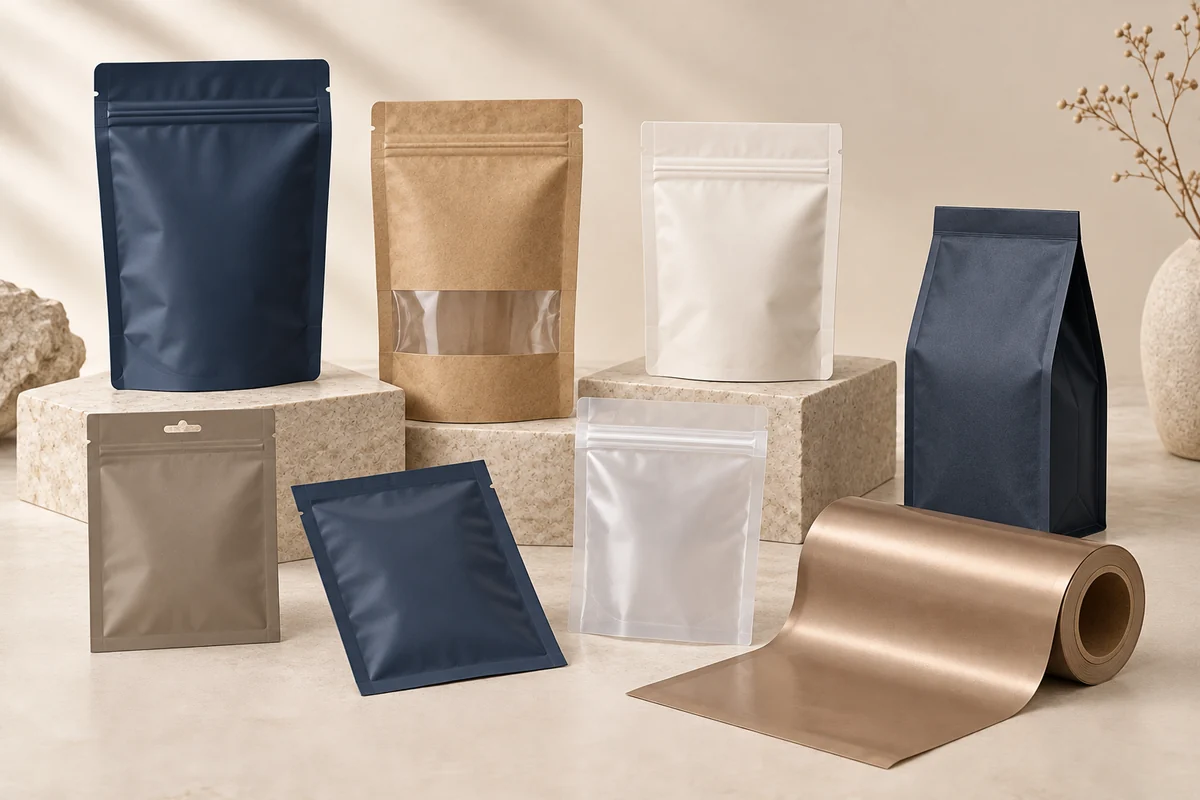
Stand-Up Pouch
A bottom-gusset format designed to stand for shelf presentation where the structure supports it.
Suitable for: Snacks, supplements, pet products
Custom pouch and film formats developed around the product, filling method, barrier needs, appearance and target market.
We coordinate structure, closures, printing, production, quality checks and shipping while keeping compliance conditional on the real project.
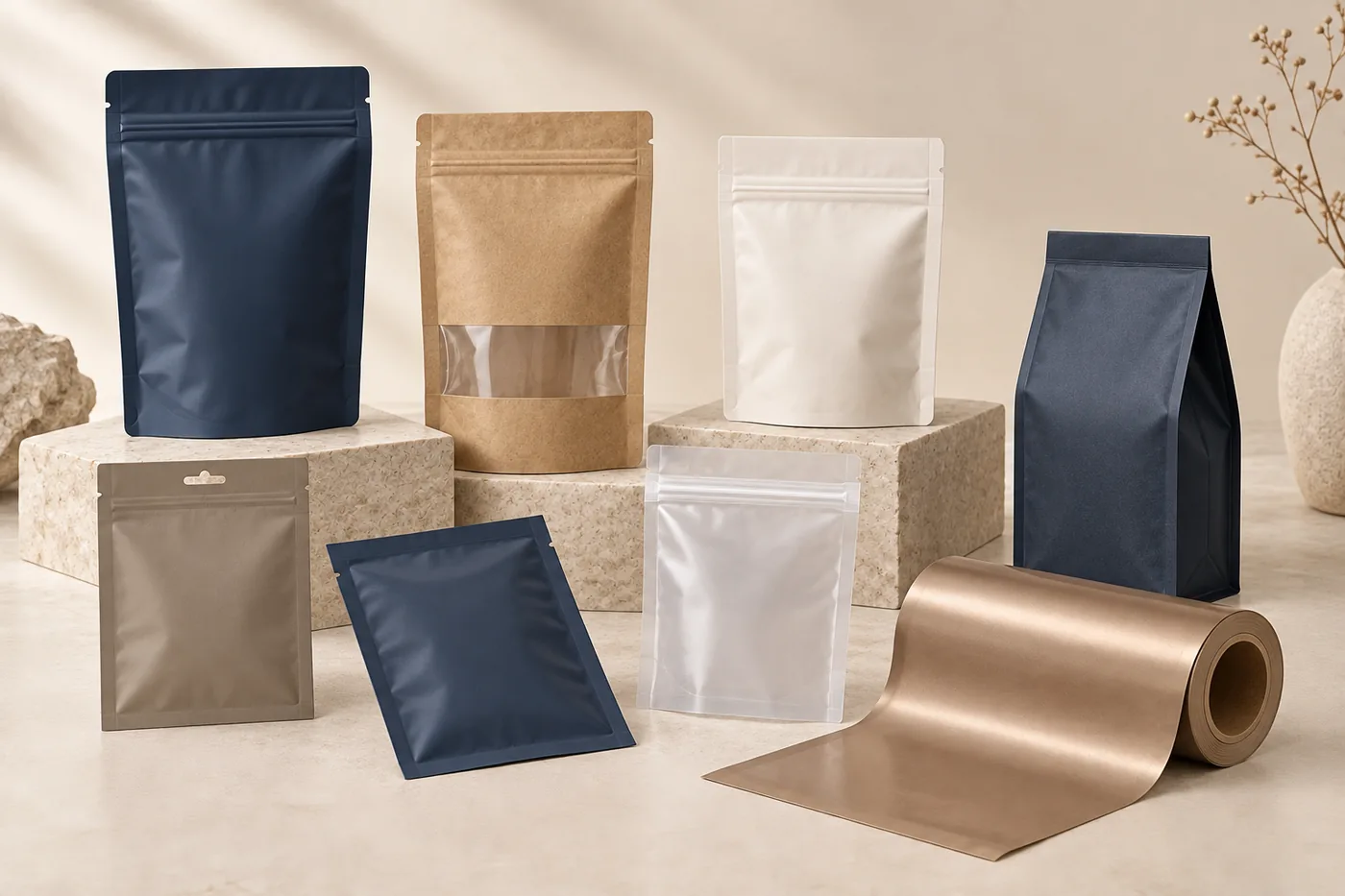
Flexible packaging uses film, paper or combined structures to create pouches or roll formats. The appropriate structure depends on the product, filling process, shelf-life goal, sealing, barrier and market requirements.
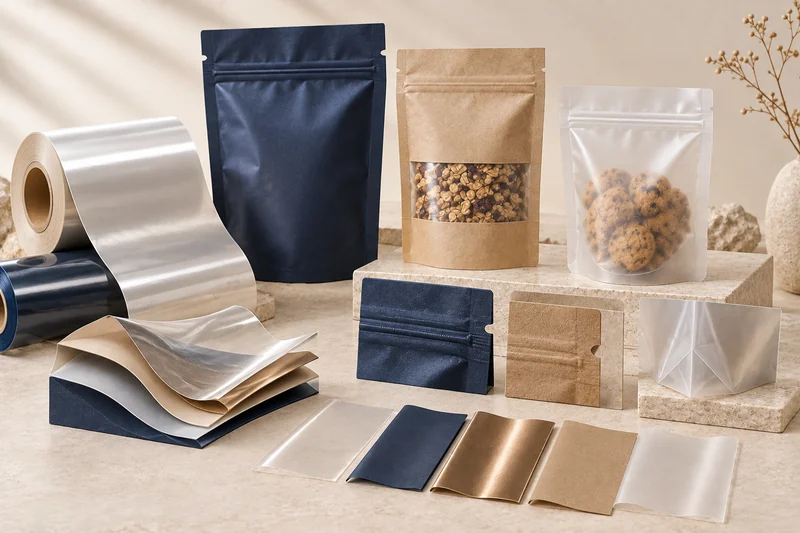
The right pouch format needs to work for filling, storage, opening, reclosure and the packed product.
A bottom-gusset format designed to stand for shelf presentation where the structure supports it.
Suitable for: Snacks, supplements, pet products
A simple sealed pouch direction for compact products, samples and refills.
Suitable for: Beauty products, samples, small portions
A reclosable zipper may be added where compatible with the product and filling process.
Suitable for: Coffee, snacks, supplements
Side or bottom gussets create additional volume and a different shelf silhouette.
Suitable for: Coffee, pet products, bulkier contents
Printed roll material may suit projects with compatible form-fill-seal equipment and confirmed specifications.
Suitable for: Equipment-based packing projects
Materials typically considered for flexible packaging include Mono-material Direction, Laminated Structures, Paper-look Structures. Selection follows the structure, the product and the market, not a default list.
Can be reviewed where performance, equipment and market requirements support it.
Multiple layers may combine print, seal and barrier functions according to the product.
A paper appearance can be explored while verifying the required functional layers.
Transparent areas depend on structure, barrier, printing and product requirements.
Features are selected around the product and filling process, not added as generic options.
Product sensitivity, filling, storage, shelf-life target and destination market guide material selection. Food contact, barrier level and certification are never assumed.
Barrier and compliance requirements depend on the product and target market, so neither is confirmed without the actual specification.
Send the product, pack size, quantity, filling method, target market and reference. We can define the questions required for a responsible quotation.
Start with what you already know:
We use those to define a pouch structure, barrier direction and closure plan you can sample against.
A pouch is only proven once the real product is filled and sealed into it, so barrier and seal decisions lead the rest.
Barrier requirement drives the layer structure, which drives most of the material cost.
Seal strength and contamination tolerance decide whether the pack holds through filling and transit.
Zippers and tear notches must remain compatible with the chosen structure and fill method.
The pack is only proven once the actual product has been filled and sealed into it.
Flexible packaging MOQ follows the laminate structure, print method, seal configuration, feature additions and whether you need finished pouches or roll stock.
Flexible-packaging MOQ depends on material structure, print method, colors, pouch dimensions, closures, conversion setup and the number of SKUs.
A pouch is only proven once the real product is filled and sealed into it. These checkpoints get the project to a tested structure.
Share the product, how it will be filled and the shelf-life or barrier goal the pack needs to meet.
Define the film or laminate structure against barrier, seal strength and the filling equipment.
Decide on zipper, tear notch, valve, window or spout and confirm they suit the structure.
Test the filled and sealed pouch -- seal integrity and opening behaviour are proven on a real sample.
Follow lamination, print, sealing and finishing through production and inspection.
Confirm whether the project supplies finished pouches or roll stock for your own equipment.
For flexible packaging, the product, fill weight and how it will be filled are the most useful starting points.
Start with the product, the fill weight and a reference image. Barrier, structure and features follow from those.
Start the RFQ →MOQ depends on material structure, print process, dimensions, pouch format, closure features and SKU allocation. It is confirmed after specification review.
We can help define a direction after reviewing the product, filling method, shelf-life target, barrier needs and market requirements.
These features may be available when they are compatible with the structure, filling process and performance requirements.
This cannot be assumed. Availability and compliance depend on the product, material structure, supplier documentation and target-market requirements.
Send product type, quantity by sku, fill weight / volume and reference images. We will turn them into the next practical specification and quotation step.
Explore components commonly reviewed alongside flexible packaging when one project includes more than the primary pack.